How to Prove Fault in a Chain Reaction Car Crash in Orlando

A chain reaction crash can happen in only a few seconds, leaving several damaged vehicles and multiple drivers trying to explain what happened. One vehicle may stop suddenly, another may fail to react in time, and a third may become involved after being pushed forward by the initial impact. By the time the vehicles come to rest, it may be difficult to determine where the sequence began or which actions contributed to each collision.
These crashes can be particularly complicated because responsibility does not always rest entirely with the driver who caused the first impact. Each driver’s conduct may need to be examined individually, including speed, following distance, attention, and reaction time. The condition of the roadway and traffic at the time of the crash may also be relevant.
Anyone involved in a car accident claim in Orlando stemming from a chain reaction crash should understand how fault is typically investigated and why preserving evidence can be especially important when multiple impacts are involved.
How Chain Reaction Crashes Typically Unfold
The Initial Triggering Event
Most chain reaction crashes begin with a triggering event that disrupts the normal flow of traffic. This could be a driver suddenly braking, changing lanes, stopping for an obstacle, or colliding with another vehicle.
For example, traffic on a busy Orlando roadway may slow unexpectedly. If the first driver brakes abruptly and the vehicle behind does not have enough time to stop, the second vehicle may collide with the first. That impact can then cause the first vehicle to move forward into another car.
Other chain reaction crashes begin when a driver commits a traffic violation or loses control of a vehicle. A distracted driver might drift into another lane, while a speeding driver may be unable to stop when traffic changes ahead.
The circumstances immediately before the first collision can be particularly important. Investigators may need to determine what caused the initial driver to brake or maneuver and whether another driver’s conduct created the situation.
The fact that a vehicle was involved in the first impact does not automatically mean its driver was responsible. A driver may have been reacting reasonably to an unexpected hazard created by someone else.
Cascading Impacts Across Multiple Vehicles
Once the initial collision occurs, subsequent impacts can happen almost simultaneously. Drivers farther back in traffic may have only a fraction of a second to respond.
A vehicle struck from behind may be pushed into the vehicle ahead. Another driver may swerve to avoid the developing crash but collide with a neighboring vehicle. Several vehicles may then become involved even though their drivers had no role in creating the original hazard.
The position of each vehicle can affect the type and severity of damage it sustains. A car at the front of a chain may experience a different impact from one in the middle or rear. Some vehicles may be struck once, while others may be involved in multiple impacts.
This distinction matters when determining how injuries and property damage occurred. A person may experience several forces during a single event, and medical professionals may need to evaluate the injuries based on the overall circumstances rather than assuming that every injury came from the same impact.
Establishing the sequence can therefore be important for understanding both liability and damages.
Establishing Fault Across Multiple Impacts
Identifying the Root Cause
One of the first questions in a chain reaction investigation is what caused the sequence to begin. Investigators may examine whether a driver was speeding, distracted, following too closely, driving aggressively, changing lanes improperly, or violating another traffic rule.
The answer is not always obvious from the final position of the vehicles. By the time police arrive, the cars may have been moved, debris may be scattered across multiple lanes, and witnesses may remember different versions of events.
The initial cause can nevertheless be important when determining responsibility. If one driver’s negligence created the hazard that set the entire sequence in motion, that driver’s conduct may be a significant part of the liability analysis.
However, identifying the first triggering event does not necessarily end the investigation. Other drivers may have contributed to later impacts through their own actions.
Considering Each Driver’s Individual Actions
Every driver involved in the chain reaction may need to be evaluated separately. A driver who was following too closely, for example, may have had insufficient stopping distance when traffic slowed.
Reaction time can also matter. Drivers are expected to respond to changing traffic conditions, although the amount of time available may depend on visibility, traffic speed, roadway conditions, and what happened immediately before the collision.
A driver who had little or no opportunity to avoid an impact may have a different level of responsibility from someone who had sufficient time to stop but continued traveling at an unsafe speed.
Florida’s comparative fault rules can make these distinctions important. Responsibility may be allocated among multiple parties based on their respective contributions to an accident, rather than assuming that only one driver can be responsible.
Insurance companies may also raise arguments about shared fault. An insurer might claim that an injured driver was following too closely, speeding, or otherwise contributed to the crash. Those assertions should be evaluated using the available evidence.
Evidence That Helps Untangle These Cases
Damage Pattern Analysis
Vehicle damage can provide important information about how a chain reaction unfolded. Investigators may examine the location, direction, and severity of damage on each vehicle to determine which impacts occurred and in what order.
For example, damage concentrated on the rear of one vehicle and the front of another may indicate a particular collision between those vehicles. Additional damage elsewhere may suggest that a vehicle was involved in another impact before or after that collision.
The position of the vehicles at the scene, debris patterns, skid marks, and other physical evidence can provide additional information.
Photographs should be taken when it is safe to do so. Images of each vehicle’s damage, the roadway, lane markings, traffic signals, debris, and surrounding conditions may become useful later.
Repair records can also matter. Before authorizing extensive repairs, vehicle owners should consider how the condition of the vehicle may be relevant to the accident investigation. In some cases, an inspection may help preserve information about the impacts.
When the sequence is particularly complicated, an accident reconstruction professional may analyze the available evidence to develop an assessment of how the collision occurred.
Traffic Camera and Witness Evidence
Third-party evidence can be especially valuable when drivers provide conflicting accounts. Traffic cameras, surveillance systems at nearby businesses, and dashcam recordings may capture some or all of the events leading up to the crash.
Not every location has a camera pointed toward the accident, and available footage may not be retained indefinitely. Identifying potential sources promptly can therefore be important.
Witnesses can provide another perspective. Someone who saw the first vehicle brake, watched a driver change lanes, or observed the sequence from another position on the road may be able to provide information that is not apparent from the vehicle damage alone.
Contact information for witnesses should be preserved whenever possible. Witness memories can become less precise as time passes, so obtaining their accounts promptly may help preserve useful information.
The National Highway Traffic Safety Administration maintains national traffic safety data and research that provides a broader context concerning motor vehicle crashes and roadway safety.
Police reports can also provide useful information, including statements from drivers and witnesses and observations made at the scene. However, an initial police assessment does not necessarily resolve every question of civil liability.
Navigating a Multi-Vehicle Claim
Weston & Pape is a personal injury law firm serving Orlando, and we help clients navigate complex fault determinations after multi-vehicle crashes. Chain reaction crashes require careful investigation because several separate impacts can occur within seconds. Determining responsibility may require identifying the initial trigger, evaluating each driver’s conduct, reconstructing the sequence of impacts, and examining evidence from multiple sources.
For someone injured in one of these crashes, it is important to focus on more than the visible damage to the vehicles. Medical records can document injuries and treatment, while employment records and other documentation may help establish the broader consequences of the accident.
Preserve photographs, witness information, medical records, insurance correspondence, and other relevant documents. If surveillance footage may exist, identifying the potential source quickly can help prevent important evidence from being lost.
It is also important to remember that being involved in a chain reaction crash does not automatically make you responsible for the entire accident. Liability should be evaluated based on the specific actions and circumstances of each driver.
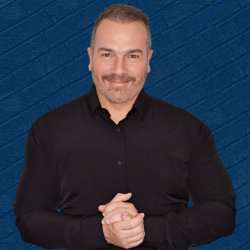
John Pape is the Managing Partner at Weston & Pape and has more than 30 years of experience representing injured clients across Florida. A summa cum laude graduate of the University of Miami School of Law, he has devoted his entire career to personal injury cases, including motor-vehicle accidents, wrongful death, and nursing-home neglect. Recognized by Verdict7, The National Trial Lawyers Top 100, and Premier Lawyers of America, John is known for his thorough preparation and commitment to achieving meaningful results for his clients.

 Call Us Today - It's Free